The Story of Boat Noodles (ก๋วยเตี๋ยวเรือ)
boat noodles at ayutata
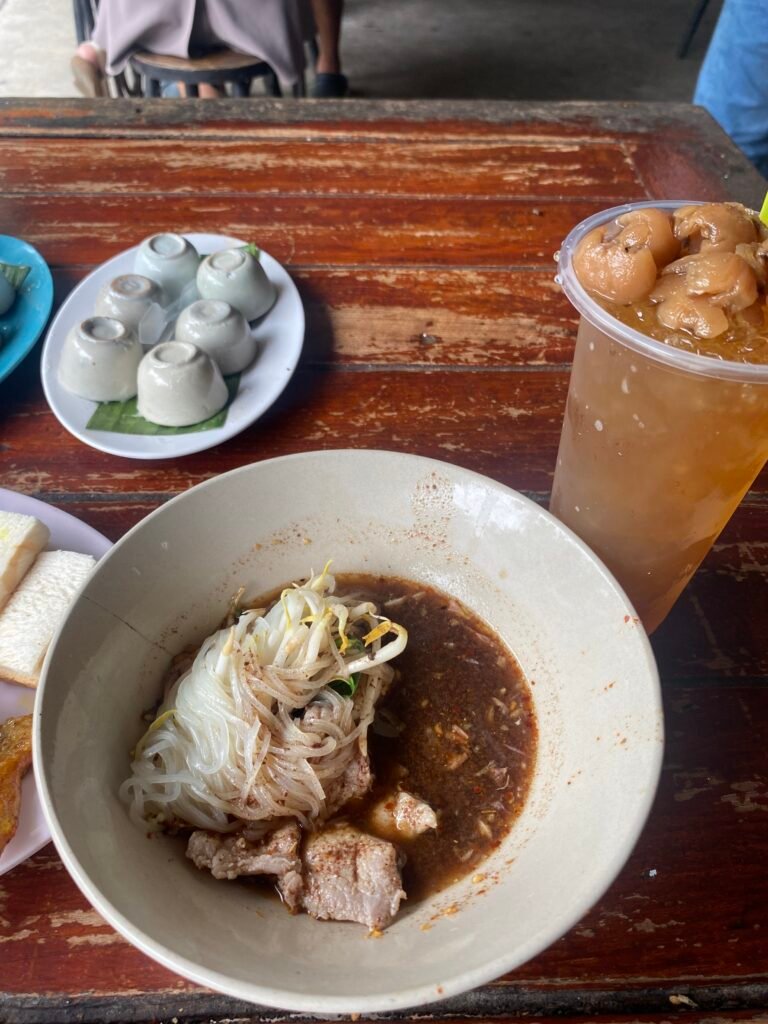
Boat noodles, or Kuai Tiao Ruea (ก๋วยเตี๋ยวเรือ), are more than just a bowl of noodles—they are a living connection to Thailand’s waterways, migration history, and urban food culture. The bowl in your photo reflects that story: delicate rice noodles, pork slices, bean sprouts, and a dark, aromatic broth enriched with spices and thickened with pig’s blood to give body, depth, and nutrition.
Roots in Ayutthaya’s River Culture
The true origins of boat noodles go back to Ayutthaya, Siam’s thriving capital from the 14th to 18th centuries. The city was built on a network of rivers and canals, where Chinese traders brought rice noodles, soy sauce, and seasonings, fusing them with Thai herbs and local meats. Vendors sold noodle soups directly from boats, balancing bowls, chopsticks, and ladles while floating on the water.
This practical way of cooking and selling food became part of daily life. Small bowls were the norm—they were easier to hand over without spilling while on rocking boats. The broth had to be concentrated and boldly flavored, because each bowl was just a few bites. Customers often ate many bowls in one sitting, stacking them high as a sign of appetite.
Migration to Bangkok’s Canals
When Ayutthaya fell in 1767 and Bangkok rose as the new capital, the canal system expanded, and so did the tradition of boat noodles. By the 20th century, they were a cornerstone of Bangkok’s floating markets and canal-side communities. Vendors cooked over small charcoal stoves on boats, with baskets of herbs, seasonings, and fresh meat at arm’s reach.
The broth was seasoned with star anise, cinnamon, garlic, and fermented bean paste, echoing Chinese influence, while the addition of pig’s blood thickened and enriched the flavor. Diners adjusted taste at the table with vinegar, sugar, fish sauce, and chili—an early form of Thailand’s ปรุงรส (prung rot), the personal balancing of flavors.
From Water to Land
As Bangkok modernized and canals gave way to roads, boat noodle vendors moved ashore, but the small bowls remained a nostalgic marker of tradition. Today, famous boat noodle shops near Victory Monument in Bangkok serve thousands of bowls a day. Eating ten or twenty tiny bowls has become a ritual—friends and families often turn it into a playful challenge, stacking bowls into towers.
A Complete Meal
The photo captures the spirit of a typical spread:
- Boat noodles – pork broth, rice noodles, bean sprouts, and meat, rich with spices and blood thickener.
- Khanom Thuai (ขนมถ้วย) – steamed coconut milk puddings, a gentle sweet to finish the salty-spicy meal.
- Longan iced drink – refreshing and orchard-sweet, balancing the deep flavors of the noodles.
Why Boat Noodles Matter
Boat noodles carry the legacy of Ayutthaya’s river markets, the migration of Chinese noodle culture into Siam, and Bangkok’s transformation into a city of canals and street stalls. They are a dish of adaptation and survival, reflecting the Thai genius for balancing flavors and blending influences. Eating a bowl today is more than a taste of pork and spice—it’s a taste of history, from floating markets to modern streets.