all right reserve to Neal D
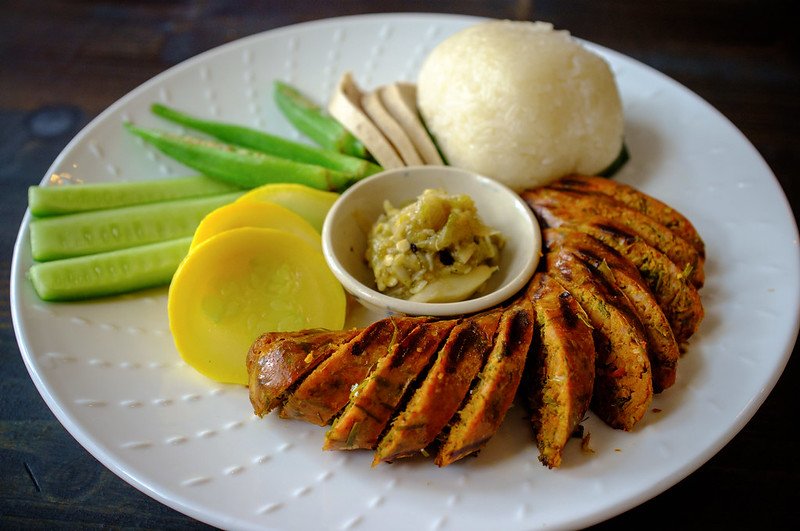
Sai ua, sometimes called “Chiang Mai sausage,” is one of Northern Thailand’s most recognizable foods. More than just meat in a casing, it is a story of land, herbs, and the Lanna palate. The name itself is simple: sai (intestine/casing) and ua(to stuff). Yet what is stuffed here is not only pork, but the history of Northern kitchens.
The Flavor of the North
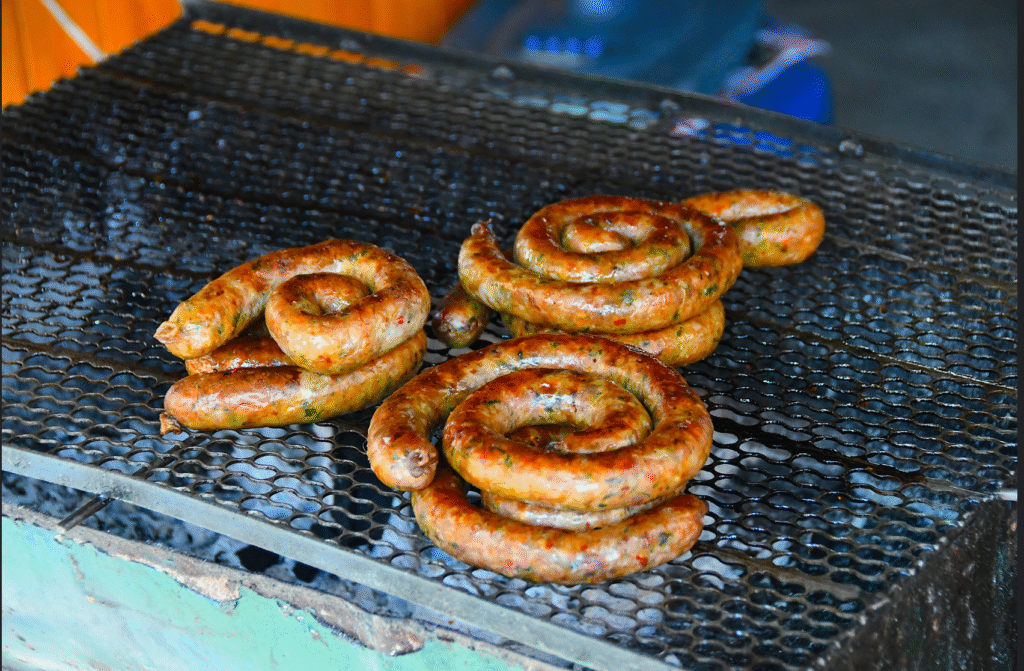
Sai ua reflects the Northern love of fresh herbs and curry pastes. Unlike sausages from Europe, it is not preserved or smoked — it is freshly made, grilled, and eaten the same day. The stuffing combines minced pork with a paste of lemongrass, galangal, kaffir lime leaves, coriander root, garlic, chilies, and turmeric. Some versions carry whispers of shrimp paste or fermented fish, binding it to broader Thai traditions.
Bite into it, and you taste the herb garden of the North: citrusy, earthy, spicy, and aromatic all at once. The fat from the pork carries the spice oils, making every slice glisten and every bite deeply satisfying.
From Home Kitchens to Street Grills
Traditionally, sai ua was prepared at home during festivals or large family gatherings. Women pounded the curry paste in mortars, men handled the butchering, and the sausage was coiled and grilled over charcoal for sharing. Today, you’ll see coils of sai ua on street grills across Chiang Mai, Lamphun, and Chiang Rai, their golden-brown skin blistering over the fire. The smell alone can stop you mid-walk in a market.
How It’s Eaten
Sai ua is rarely eaten alone. In Northern meals, it’s sliced into rounds and shared as one dish among many, often alongside sticky rice, nam prik ong (tomato–minced pork chili dip), fresh herbs, and steamed vegetables. The spicy, herbal punch of sai ua balances beautifully against the simplicity of rice and the bitterness of local greens.
A Culinary Ambassador
For many visitors, sai ua is the first taste of Northern Thai cuisine, and it has become an edible ambassador of the region. Chiang Mai markets sell it vacuum-packed for travelers to take home, but its essence is always freshest when eaten hot off the grill, where the casing still snaps and the herbs still sing.
👉 Where to Try Sai Ua:
- Warorot Market (Chiang Mai): classic coils grilled fresh each morning.
- Huen Phen (Chiang Mai): a sit-down restaurant with traditional Lanna dishes.
- Street stalls along Lamphun Road: smoky, no-frills, unforgettable.
✨ In essence: Sai ua is not just a sausage — it is the herb garden of Northern Thailand, bound by pork, smoke, and memory. To taste it is to taste the North.